
Anal fissures are small tears in the lining of the anus that can cause severe pain, burning, and bleeding during bowel movements. While many fissures heal with proper treatment, recurrence is common if the root causes are not addressed.
In this detailed guide, Dr. Sandhya Bade explains how to prevent anal fissures from coming back, the importance of lifestyle modifications, and when to seek medical treatment.
Understanding Anal Fissures
An anal fissure develops when the anal lining stretches excessively, usually due to hard stools or straining.
Common Symptoms
- Sharp pain during bowel movements
- Burning sensation
- Bright red bleeding
- Itching and irritation
- Fear of passing stool due to pain
Without proper care, acute fissures may become chronic and difficult to treat.
Why Do Anal Fissures Recur?
Many patients experience repeated fissures because the underlying causes are not corrected.
Main Reasons for Recurrence
- Chronic constipation
- Low-fiber diet
- Poor hydration
- Straining during bowel movements
- Sedentary lifestyle
- Ignoring early symptoms
Early management and preventive habits are essential to avoid recurrence.
Importance of Early Treatment
Ignoring fissure symptoms can worsen the tear and increase pain. Timely consultation with Dr. Sandhya Bade, an experienced Lady General Surgeon in Pune, helps prevent chronic fissures and complications.
Patients searching online for a “General Surgeon Near Me” often seek help only after severe pain develops. Early medical care can reduce treatment duration and discomfort.
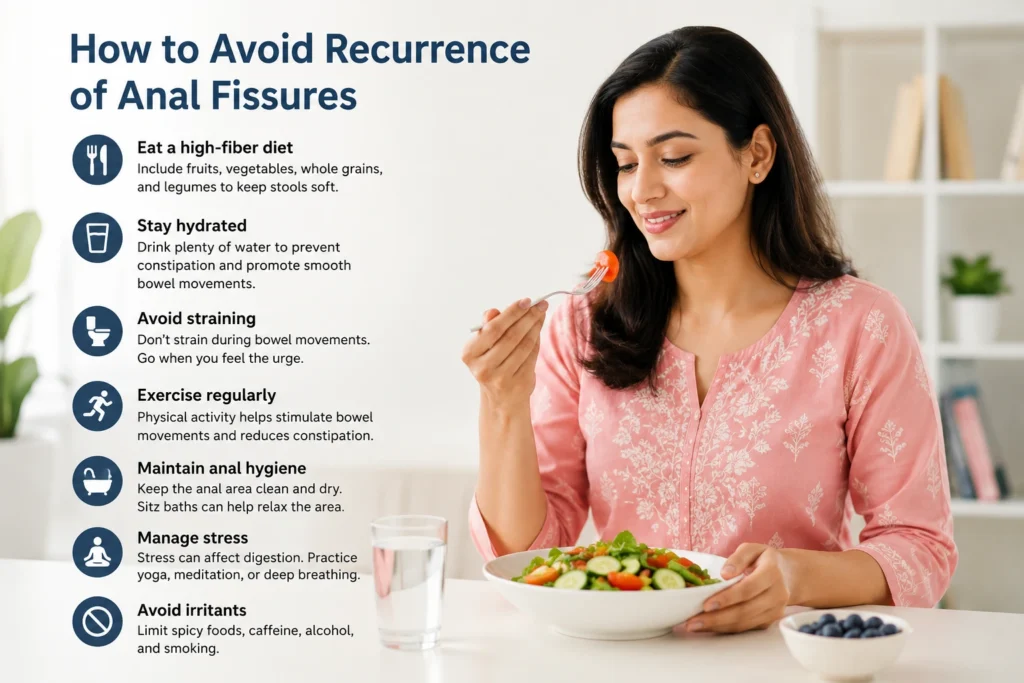
Best Ways to Prevent Anal Fissure Recurrence
1. Maintain Soft Bowel Movements
Hard stools are the leading cause of fissures.
Tips to Prevent Constipation
- Eat high-fiber foods daily
- Drink adequate water
- Avoid processed foods
- Include fruits and vegetables
2. Increase Fiber Intake
Fiber helps soften stool and improves bowel regularity.
Best Fiber Sources
- Oats
- Whole grains
- Lentils
- Apples
- Papaya
- Leafy vegetables
A balanced diet also supports recovery after Fissure Treatment in Pune.
3. Stay Hydrated
Dehydration hardens stools and increases strain.
Hydration Tips
- Drink 8–10 glasses of water daily
- Include coconut water and fresh juices
- Limit excessive caffeine
4. Avoid Straining During Bowel Movements
Straining puts pressure on the anal lining and delays healing.
Healthy Toilet Habits
- Do not sit for too long on the toilet
- Avoid excessive pushing
- Respond promptly to bowel urges
5. Exercise Regularly
Physical activity improves digestion and bowel movement regularity.
Helpful Activities
- Walking
- Yoga
- Light stretching
- Cycling
Exercise also reduces the risk of related anorectal conditions requiring the Best Anal Abscess Treatment in Pune.
6. Maintain Proper Anal Hygiene
Poor hygiene may irritate the affected area.
Hygiene Tips
- Use lukewarm water after bowel movements
- Avoid harsh soaps
- Pat dry gently
7. Use Sitz Baths
Warm water baths relax anal muscles and improve blood circulation.
Benefits
- Reduces pain
- Relieves muscle spasm
- Supports healing
Role of Medical Treatment in Preventing Recurrence
Lifestyle changes alone may not be enough for chronic fissures.
Common Medical Treatments
- Stool softeners
- Medicated creams
- Pain-relief medications
Advanced Treatment Options
Persistent fissures may require minimally invasive procedures performed by an experienced Laparoscopic Surgeon in Pune.
Connection Between Piles and Fissures
Many patients suffer from both conditions simultaneously.
Constipation and straining increase the risk of fissures as well as hemorrhoids. Seeking proper Piles treatment in pune can help improve overall anorectal health and reduce recurrence risk.
Choosing the Right Specialist
Selecting the right doctor is crucial for long-term recovery.
Consult Dr. Sandhya Bade, a trusted Female Specialist in Pune, for personalized diagnosis and comprehensive treatment plans.
An experienced surgeon can identify underlying digestive or anorectal issues contributing to recurrent fissures.
Foods to Avoid if You Have Recurrent Fissures
Avoid These Foods
- Excessively spicy food
- Processed snacks
- Deep-fried foods
- Low-fiber diets
- Excess alcohol
These foods may worsen constipation and irritation.
Lifestyle Changes That Help Long-Term Recovery
Build Healthy Habits
- Eat meals on time
- Sleep adequately
- Reduce stress
- Stay physically active
Consistency is key to preventing recurrence.
Warning Signs You Should Never Ignore
Seek immediate medical attention if you experience:
- Severe pain lasting several days
- Persistent bleeding
- Fever or swelling
- Difficulty passing stool
These may indicate complications requiring urgent treatment.
People Also Ask (FAQs)
Q1. Can anal fissures heal permanently?
Yes, with proper treatment and lifestyle changes, fissures can heal completely.
Q2. Why do fissures keep coming back?
Recurring constipation and straining are the most common causes.
Q3. Is surgery always required for fissures?
No, many fissures heal with medication and lifestyle modifications.
Q4. How long does fissure healing take?
Acute fissures may heal within a few weeks, while chronic fissures take longer.
Q5. What foods help heal fissures faster?
Fiber-rich foods and adequate hydration help improve healing.
Final Thoughts
Recurring anal fissures can affect your comfort, confidence, and quality of life. However, with the right combination of medical care, dietary changes, hydration, and healthy habits, recurrence can often be prevented successfully.
Early diagnosis and expert guidance are essential to avoid chronic pain and complications. If you experience persistent symptoms, consult Dr. Sandhya Bade for comprehensive evaluation and personalized treatment.
Address:- Medistar Hospital for Orthopaedics & Advanced Surgeries, Sai Canary New Rd, Balewadi, Pune, Maharashtra 411045
Phone:- 7769 88 1155
Get Direction