
Millions of people suffer in silence with painful bowel movements, rectal bleeding, and persistent discomfort — yet very few realize that the culprit is often a small, tear-like wound called an anal fissure, triggered almost entirely by chronic constipation. Understanding this connection is the first step toward lasting relief.
In this guide, you will learn exactly how constipation sets off the chain reaction that leads to fissures, what the warning signs look like, and — most importantly — how to prevent and treat this condition with the help of an expert specialist.
What Is an Anal Fissure?
An anal fissure is a small tear or crack in the thin, moist tissue (mucosa) lining the anus. While the name sounds alarming, fissures are extremely common and affect people of all ages — from infants to the elderly. The problem, however, is that without proper treatment and lifestyle changes, they can become chronic, severely impacting quality of life.
Common symptoms include:
- Sharp, burning pain during or after a bowel movement
- Bright red blood on toilet paper or in the toilet bowl
- Visible crack or tear around the anal opening
- Muscle spasm in the anal sphincter after passing stool
- Itching or irritation around the anus
The Constipation–Fissure Connection: How It Happens
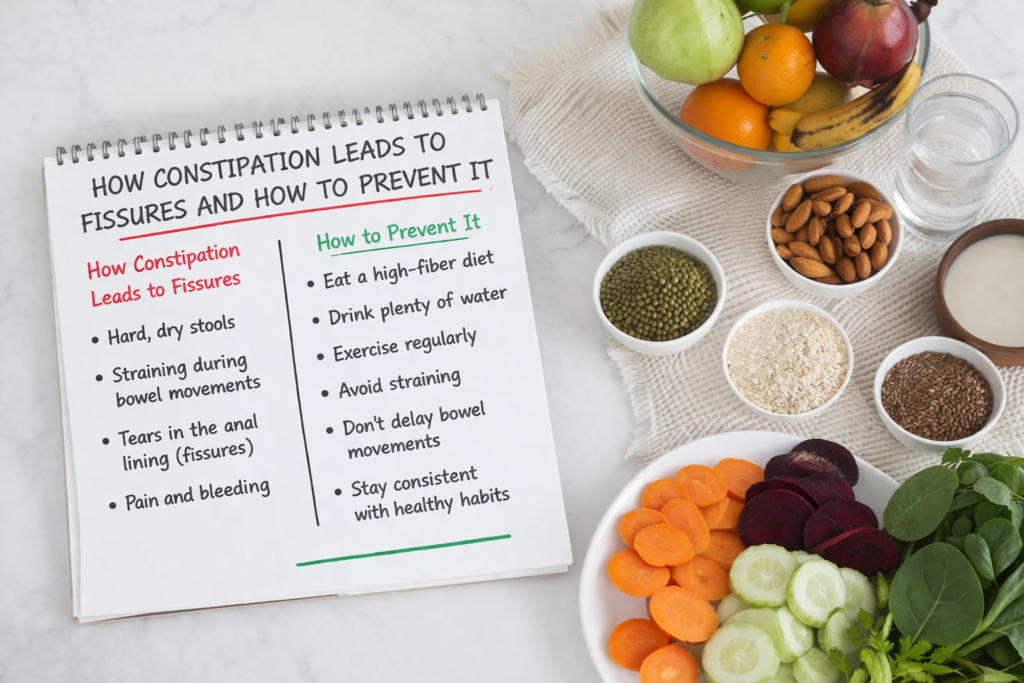
Constipation and anal fissures are deeply interlinked. Here is the step-by-step mechanism that explains why hard, infrequent stools are the leading cause of fissures:
Step 1: Hard, Bulky Stool Forms
When the body lacks adequate water, fibre, or physical movement, stool becomes dry, compact, and difficult to pass. This hard mass sits in the rectum and grows larger the longer it stays.
Step 2: Excessive Straining
Passing a hard stool requires significant straining. This elevated pressure is transmitted directly to the anal canal walls. The tissues stretch far beyond their natural capacity.
Step 3: Tearing of the Anal Mucosa
The delicate lining of the anus — which is thinner than skin — cannot withstand repeated or extreme stretching. It tears, creating a fissure. The tear is typically located at the posterior midline (6 o’clock position) where blood supply is naturally lower.
Step 4: Sphincter Spasm
Once a tear forms, the internal anal sphincter goes into spasm as a protective reflex. This spasm reduces blood flow to the already vulnerable area, preventing healing. It also causes intense pain — which leads the patient to avoid bowel movements — making constipation even worse. This creates a vicious cycle that can be very difficult to break without professional intervention.
Step 5: Chronic Fissure Develops
If the cycle is not interrupted, the acute fissure becomes chronic — deeper, wider, and surrounded by scar tissue. Chronic fissures are far more resistant to home remedies and typically require medical or surgical treatment.
Risk Factors That Increase Your Vulnerability
While constipation is the primary driver, several factors increase the risk of developing fissures:
- Low-fibre diet: Processed foods, refined flour, and low vegetable intake lead to hard stools.
- Dehydration: Insufficient water intake makes stool drier and harder to pass.
- Sedentary lifestyle: Physical inactivity slows gut motility significantly.
- Pregnancy and childbirth: Hormonal changes slow digestion; delivery puts pressure on the anal area.
- Inflammatory bowel disease (IBD): Conditions like Crohn’s disease damage the bowel lining.
- Previous anal surgery: Scarring can reduce the elasticity of the anal canal.
- Ignoring the urge: Regularly suppressing the urge to defecate dries out stool in the rectum.
How to Prevent Anal Fissures: Evidence-Based Strategies
Prevention is straightforward once you understand the cause. The goal is to keep stools soft, regular, and easy to pass — eliminating the trauma that causes tears.
- Increase Dietary Fibre
Aim for 25–35 grams of fibre per day. Include whole grains, lentils, beans, vegetables (broccoli, spinach, carrots), and fruits (papaya, guava, bananas) in every meal. Fibre adds bulk and water to stool, making it soft and easy to pass without straining.
- Stay Well Hydrated
Drink a minimum of 8–10 glasses of water daily. Starting your morning with a glass of warm water can stimulate bowel movement. Limit caffeine and alcohol, which dehydrate the body and worsen constipation.
- Exercise Regularly
Even a 30-minute brisk walk daily significantly improves intestinal motility. Physical activity stimulates peristalsis — the wave-like muscle contractions that move stool through the colon. Yoga poses such as Pawanmuktasana and Malasana (squat pose) are particularly helpful.
- Never Ignore the Urge
Respond to the urge to defecate promptly. Suppressing it causes stool to sit longer in the colon, where more water is absorbed, making it harder and drier.
- Use a Footstool
Elevating your feet on a small stool while sitting on the toilet puts your body in a natural squatting position. This straightens the anorectal angle, reducing the force needed to pass stool.
- Avoid Prolonged Straining
If you cannot pass stool within 5 minutes, get up and try later. Prolonged straining increases pressure in the anal canal dramatically and is a leading cause of both fissures and piles.
- Sitz Baths
Sitting in warm water (not hot) for 10–15 minutes, two to three times a day, relaxes the anal sphincter, improves blood circulation to the area, and promotes healing of minor tears before they become chronic.
- Use Stool Softeners When Needed
Over-the-counter stool softeners (like lactulose or isabgol/psyllium husk) can be used short-term to ease bowel movements during constipation episodes. Always consult your doctor before long-term use.
When to See a Specialist
Home remedies and dietary changes work well for mild or early-stage fissures. However, you must consult a specialist promptly if:
- Pain persists for more than 4–6 weeks despite home care
- Bleeding is significant or continues after each bowel movement
- You notice a skin tag or sentinel pile near the anal opening
- You develop fever or notice pus/discharge (signs of infection or abscess)
- Bowel habits worsen significantly despite dietary changes
A Fissure specialist doctor near me can assess the severity of your condition, rule out other causes (such as haemorrhoids, IBD, or infection), and create a personalised treatment plan.
Treatment Options for Anal Fissures
Modern fissure treatment has evolved significantly. Depending on severity, treatment may include:
Conservative Management
- High-fibre diet and hydration
- Warm sitz baths
- Topical anaesthetic creams for pain relief
- Stool softeners and bulk-forming laxatives
Medical Treatment
- Topical nitrates or calcium channel blockers to relax the sphincter
- Botulinum toxin (Botox) injections to temporarily paralyse the sphincter
Surgical Treatment
For chronic fissures that do not respond to medical therapy, Lateral Internal Sphincterotomy (LIS) — a minimally invasive procedure — is the gold standard. It involves cutting a small portion of the internal sphincter to relieve spasm and restore blood flow, enabling healing. Fissure Treatment in Pune offered by experienced colorectal surgeons includes both non-surgical and surgical options with excellent success rates.
The Link Between Fissures and Anal Abscesses
Fissures that remain untreated can sometimes develop into anorectal abscesses — painful, pus-filled infections in the tissue around the anus. While not every fissure leads to an abscess, the chronic inflammation and tissue breakdown create an environment where bacteria can thrive. If you suspect an abscess, early intervention is critical. Seeking Best Anal Abscess Treatment in Pune at the right time can prevent the abscess from developing into a complex fistula, which requires far more extensive surgery.
Are Fissures Related to Piles?
Many patients confuse anal fissures with haemorrhoids (piles), as both cause rectal bleeding and discomfort. The key difference: fissures are tears in the anal lining, while piles are swollen blood vessels inside or outside the anus. However, both conditions share the same root cause — constipation and straining. In fact, many patients present with both simultaneously. If you are experiencing symptoms of piles alongside a fissure, consulting a specialist offering piles treatment in Pune ensures both conditions are addressed together rather than one masking the other.
Meet Your Specialist
Dr. Sandhya Bade
Specialist in Colorectal & Gastrointestinal Surgery | Pune
Dr. Sandhya Bade is one of the most trusted and experienced colorectal surgeons in Pune, with a dedicated focus on anorectal conditions including fissures, fistulas, piles, and abscesses. Known for her patient-first approach, compassionate care, and use of the latest minimally invasive techniques, she has helped thousands of patients find lasting relief from painful and embarrassing anorectal conditions.
Patients looking for a Fissure specialist doctor in Pune or those who need expert guidance on chronic constipation management will find comprehensive, evidence-based care under her supervision.
If you are searching for the Best Doctors For Fissure Treatment In Pune, Dr. Sandhya Bade combines surgical precision with holistic prevention strategies to ensure you do not just recover — you thrive.
Frequently Asked Questions (FAQs)
Q1. Can constipation alone cause a fissure?
Yes. Chronic constipation — especially when it leads to repeated straining with hard stools — is the single most common cause of anal fissures. Treating the underlying constipation is therefore the most critical part of fissure prevention.
Q2. How long does an anal fissure take to heal?
Acute fissures (those present for less than 6 weeks) often heal with conservative treatment — diet changes, sitz baths, and topical medications — within 4–8 weeks. Chronic fissures may require medical or surgical intervention and take longer to resolve.
Q3. Is surgery always required for fissures?
No. The majority of fissures are treated successfully without surgery. However, for chronic or recurrent fissures that do not respond to conservative or medical treatment, minimally invasive surgical procedures like Lateral Internal Sphincterotomy offer excellent outcomes with minimal recovery time.
Q4. Can fissures recur after treatment?
Yes, fissures can recur if the root cause — constipation — is not properly managed long-term. Patients who maintain a high-fibre diet, stay hydrated, and exercise regularly have a very low rate of recurrence.
Q5. Are fissures a sign of something more serious?
In most cases, fissures are benign and caused by constipation. However, multiple or unusual fissures (not at the typical midline position) can occasionally indicate Crohn’s disease, STIs, or other conditions. A thorough evaluation by a specialist rules out these possibilities.
Q6. When should I stop trying home remedies and see a doctor?
If your symptoms — pain, bleeding, or discomfort — have not improved after 2 weeks of home care, or if they are worsening, it is time to consult a specialist. Do not delay: untreated fissures can become chronic and develop complications including abscess or fistula.
Take the First Step Toward Pain-Free Living
Constipation and fissures are not conditions you simply have to live with. With the right guidance, most patients achieve complete healing and significantly improved quality of life. Whether you need a personalized dietary plan, medical treatment, or a surgical consultation, expert help is available.
Dr. Sandhya Bade and her team are committed to providing compassionate, evidence-based care for all anorectal conditions. Do not let pain, embarrassment, or fear stop you from seeking the treatment you deserve.