
A hernia can cause discomfort, pain, and difficulty in performing daily activities — including sleeping. Many patients struggle to find a comfortable position at night due to pressure and strain on the affected area.
Dr. Sandhya Bade explains the best ways to sleep safely with a hernia, reduce pain, and prevent complications.
What Is a Hernia?
A hernia occurs when an internal organ pushes through a weak spot in the surrounding muscle or tissue. Common types include:
Types of Hernia
- Inguinal hernia
- Umbilical hernia
- Hiatal hernia
- Incisional hernia
Proper care and posture, especially during sleep, can help manage symptoms.
Why Sleeping Position Matters in Hernia
Incorrect sleeping posture can:
- Increase pressure on the hernia
- Cause pain or discomfort
- Worsen the bulge
- Affect healing after surgery
Choosing the right sleeping position helps reduce strain and promotes better rest.
Best Sleeping Positions for Hernia Relief
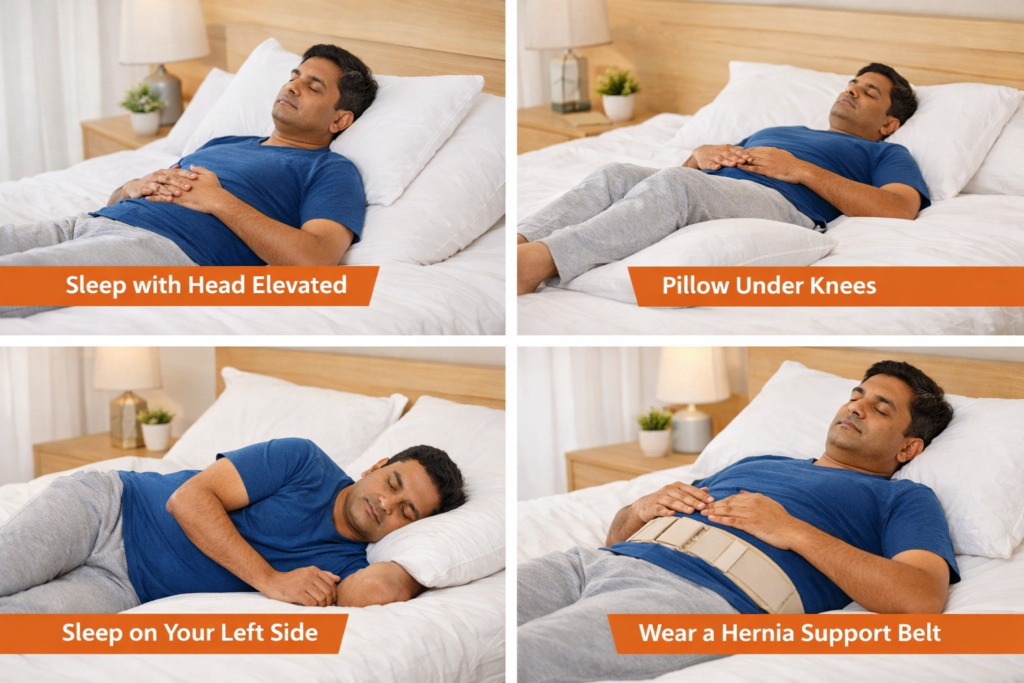
1. Sleeping on Your Back (Most Recommended)
Sleeping on your back distributes weight evenly and reduces pressure on the abdomen.
Tips:
- Use a pillow under your knees
- Keep your head slightly elevated
2. Elevating the Upper Body
This position is especially helpful for hiatal hernia patients.
Benefits:
- Reduces acid reflux
- Prevents discomfort
- Improves breathing
3. Side Sleeping with Support
Sleeping on your side may help if done correctly.
Tips:
- Place a pillow between your knees
- Avoid curling too tightly
- Support the abdomen with a cushion
4. Reclined Position
Using an adjustable bed or reclining chair can help relieve pressure in certain cases.
Sleeping Positions to Avoid
1. Sleeping on Your Stomach
This increases abdominal pressure and can worsen the hernia.
2. Twisted or Curled Positions
These positions strain the abdominal muscles.
3. Flat Sleeping for Hiatal Hernia
Lying completely flat may worsen acid reflux symptoms.
Tips for Comfortable Sleep with Hernia
Use Proper Pillows
Support your back, neck, and abdomen.
Maintain Healthy Weight
Excess weight increases abdominal pressure.
Avoid Heavy Meals Before Bed
Eating late can worsen discomfort.
Wear Support Garments
A hernia belt may provide temporary support.
When to Consider Medical Treatment
If hernia symptoms worsen, lifestyle adjustments alone may not be enough.
Consult Dr. Sandhya Bade, an experienced Lady General Surgeon in Pune, for proper evaluation and treatment.
You should seek medical help if you experience:
- Severe pain
- Increasing bulge size
- Nausea or vomiting
- Difficulty in bowel movements
Advanced Treatment Options for Hernia
Laparoscopic Hernia Surgery
Modern minimally invasive surgery offers:
- Smaller incisions
- Less pain
- Faster recovery
- Minimal scarring
Consulting a skilled Laparoscopic Surgeon in Pune ensures safe and effective results.
Patients searching for the Best Hernia Surgery Doctor in Pune often prefer specialists with experience in laparoscopic techniques.
Choosing the Right Hernia Specialist
Selecting the right surgeon is crucial for successful treatment.
Consult a trusted Hernia Specialist in Pune who offers:
- Accurate diagnosis
- Advanced surgical options
- Personalized care
Patients often look for the Best Laparoscopic hernia surgeon in Pune to ensure minimal complications and faster healing.
If you are located nearby, you may also consider a Hernia specialist In Balewadi for convenient consultation.
Cost of Hernia Surgery in Pune
Many patients are concerned about Hernia Surgery cost in Pune.
Cost depends on:
- Type of hernia
- Surgical method
- Hospital facilities
- Surgeon’s expertise
Choosing quality care ensures better outcomes and long-term relief.
How to Find the Right Doctor Near You
When searching online for a “General Surgeon near me”, consider:
- Experience and qualifications
- Patient reviews
- Hospital infrastructure
- Availability of advanced procedures
Recovery Tips After Hernia Surgery
Follow Doctor’s Instructions
Adhere to medication and activity guidelines.
Avoid Heavy Lifting
This prevents strain on the surgical site.
Gradual Activity
Resume normal routine slowly.
Maintain Healthy Diet
Supports healing and prevents constipation.
People Also Ask (FAQs)
Q1. What is the best sleeping position for a hernia?
Sleeping on your back with slight elevation is usually the safest option.
Q2. Can sleeping position worsen a hernia?
Yes, incorrect posture can increase pressure and discomfort.
Q3. Should I wear a hernia belt while sleeping?
It may help temporarily but should be used only under medical advice.
Q4. Is surgery necessary for hernia?
Not always, but most hernias require surgery for permanent treatment.
Q5. How long does recovery take after hernia surgery?
Recovery usually takes 2–4 weeks depending on the procedure.
Final Thoughts
Sleeping comfortably with a hernia can be challenging, but the right position and proper support can significantly reduce discomfort. While lifestyle adjustments help manage symptoms, they do not cure the condition.
If your symptoms persist or worsen, consult Dr. Sandhya Bade for expert diagnosis and advanced treatment options. Early intervention ensures better outcomes, faster recovery, and improved quality of life.
Prioritizing proper sleep posture, healthy habits, and timely medical care will help you manage hernia symptoms effectively and prevent complications.
Address:- Medistar Hospital for Orthopaedics & Advanced Surgeries, Sai Canary New Rd, Balewadi, Pune, Maharashtra 411045
Phone:- 7769 88 1155
Get Direction