

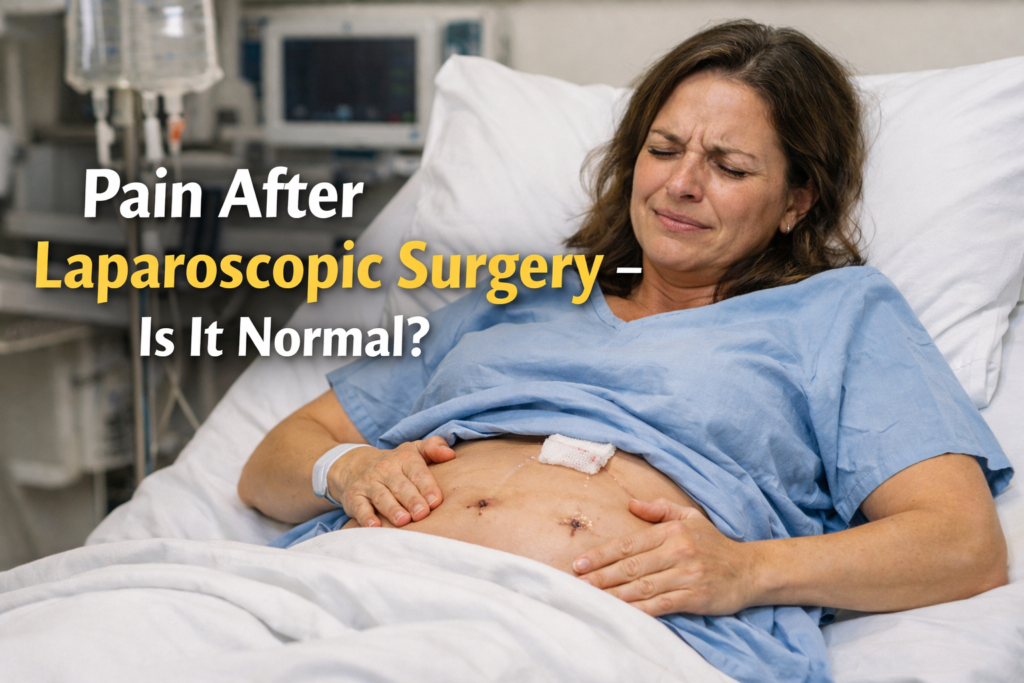
Laparoscopic surgery is considered a minimally invasive procedure with faster recovery and less discomfort compared to open surgery. However, many patients worry when they experience pain after the procedure. Is it normal? How long does it last? When should you seek medical help?
According to Dr. Sandhya Bade, some degree of pain after laparoscopic surgery is completely normal and part of the healing process. Understanding what’s expected can help reduce anxiety and support smoother recovery.
Why Do You Feel Pain After Laparoscopic Surgery?
Even though laparoscopic surgery involves small incisions, your body still undergoes internal healing. Pain may occur due to:
1. Small Incision Healing
Tiny cuts are made to insert surgical instruments. These incisions can feel sore or tender for a few days.
2. Gas Pain (Shoulder Tip Pain)
Carbon dioxide gas is used to inflate the abdomen for better visibility. Residual gas can irritate the diaphragm, causing shoulder or chest discomfort.
3. Internal Tissue Healing
Even without large cuts, internal organs and tissues need time to recover.
4. Muscle Soreness
Abdominal muscles may feel tight or sore, especially when coughing, laughing, or standing up.
How Long Does Pain Last After Laparoscopy?
Pain duration varies depending on the type of procedure and individual healing response.
-
First 24–72 hours: Mild to moderate pain is common
-
First week: Gradual reduction in discomfort
-
2–3 weeks: Most patients feel significantly better
-
4–6 weeks: Full recovery for most routine procedures
Severe or worsening pain is not normal and should be evaluated immediately.
What Type of Pain Is Considered Normal?
Normal post-laparoscopic pain includes:
-
Mild abdominal discomfort
-
Slight swelling around incision sites
-
Shoulder pain due to gas
-
Temporary bloating
-
Mild fatigue
If the pain improves with medication and rest, it is generally part of normal healing.
When Should You Be Concerned?
Seek medical attention if you experience:
-
Severe or increasing abdominal pain
-
High fever
-
Redness or pus at incision site
-
Persistent vomiting
-
Difficulty breathing
-
Heavy bleeding
Early evaluation prevents complications.
How to Manage Pain After Laparoscopic Surgery
1. Take Prescribed Medications
Your surgeon may prescribe pain relievers or anti-inflammatory medicines. Take them as directed.
2. Walk Gently
Light walking helps release trapped gas and improves blood circulation.
3. Apply Warm Compress
A warm compress may help reduce muscle soreness and gas discomfort.
4. Proper Rest
Avoid heavy lifting or strenuous activities for at least 2–4 weeks.
5. Stay Hydrated
Drinking water helps reduce bloating and supports healing.
Does the Type of Surgery Affect Pain Levels?
Yes. The intensity of discomfort depends on the procedure performed. Common laparoscopic procedures include:
-
Gynecological procedures
-
Diagnostic laparoscopy
Recovery experience varies slightly depending on complexity.
Advantages of Laparoscopic Surgery Over Open Surgery
Patients often prefer laparoscopy because it offers:
-
Smaller scars
-
Less post-operative pain
-
Shorter hospital stay
-
Faster return to daily activities
-
Lower risk of infection
Choosing an experienced Lady General Surgeon in Pune ensures safe surgical outcomes and proper recovery guidance.
Recovery Timeline – What to Expect
Day 1–2
-
Mild pain and grogginess
-
Start light walking
Day 3–7
-
Pain reduces gradually
-
Resume light daily tasks
Week 2–3
-
Minimal discomfort
-
Return to work (depending on job type)
Week 4–6
-
Near full recovery
-
Resume normal exercise with doctor approval
For best outcomes, consult a skilled Female Laparoscopic Surgeon in Pune who provides structured post-operative care.
Tips for Faster Recovery
-
Follow dietary recommendations
-
Avoid constipation
-
Keep incision area clean and dry
-
Attend follow-up appointments
-
Avoid smoking and alcohol
Consulting a trusted Laparoscopic Doctor in Pune helps you stay on track with recovery milestones.
Emotional Recovery After Surgery
It’s common to feel anxious about post-surgery pain. Understanding that mild discomfort is normal can ease stress. Proper counseling and reassurance from your surgeon make a big difference.
Many patients searching for the Best Laparoscopic Surgeons Near Me in Pune prioritize both surgical expertise and post-operative support.
Choosing the Right Hospital Matters
Selecting the Best Laparoscopic Surgery Hospital in Pune ensures:
-
Advanced surgical equipment
-
Skilled surgical team
-
Infection control standards
-
Comprehensive post-operative monitoring
Proper hospital care reduces complications and improves recovery comfort.
People Also Ask (FAQs)
Q1. Is it normal to have shoulder pain after laparoscopic surgery?
Yes, it is caused by trapped gas used during the procedure and usually resolves within a few days.
Q2. How much pain is too much after laparoscopy?
Severe, worsening, or persistent pain beyond one week should be evaluated.
Q3. Can I sleep on my side after laparoscopic surgery?
Yes, but only if comfortable. Use pillows for support.
Q4. When can I start exercising?
Light walking is encouraged immediately, but heavy workouts should wait 4–6 weeks.
Q5. How do I reduce gas pain quickly?
Walking, staying upright, and gentle movement help relieve gas discomfort.
Final Thoughts
Pain after laparoscopic surgery is generally mild and temporary. Understanding what is normal helps reduce anxiety and promotes smooth recovery. Most patients recover quickly with proper care, medication, and follow-up.
If you experience unusual symptoms or persistent discomfort, consult an experienced Laparoscopic Surgeon in Pune for personalized guidance.
Early care, expert supervision, and adherence to recovery instructions are key to safe healing and long-term well-being.
Address:- Medistar Hospital for Orthopaedics & Advanced Surgeries, Sai Canary New Rd, Balewadi, Pune, Maharashtra 411045
Phone:- 7769 88 1155
Get Direction